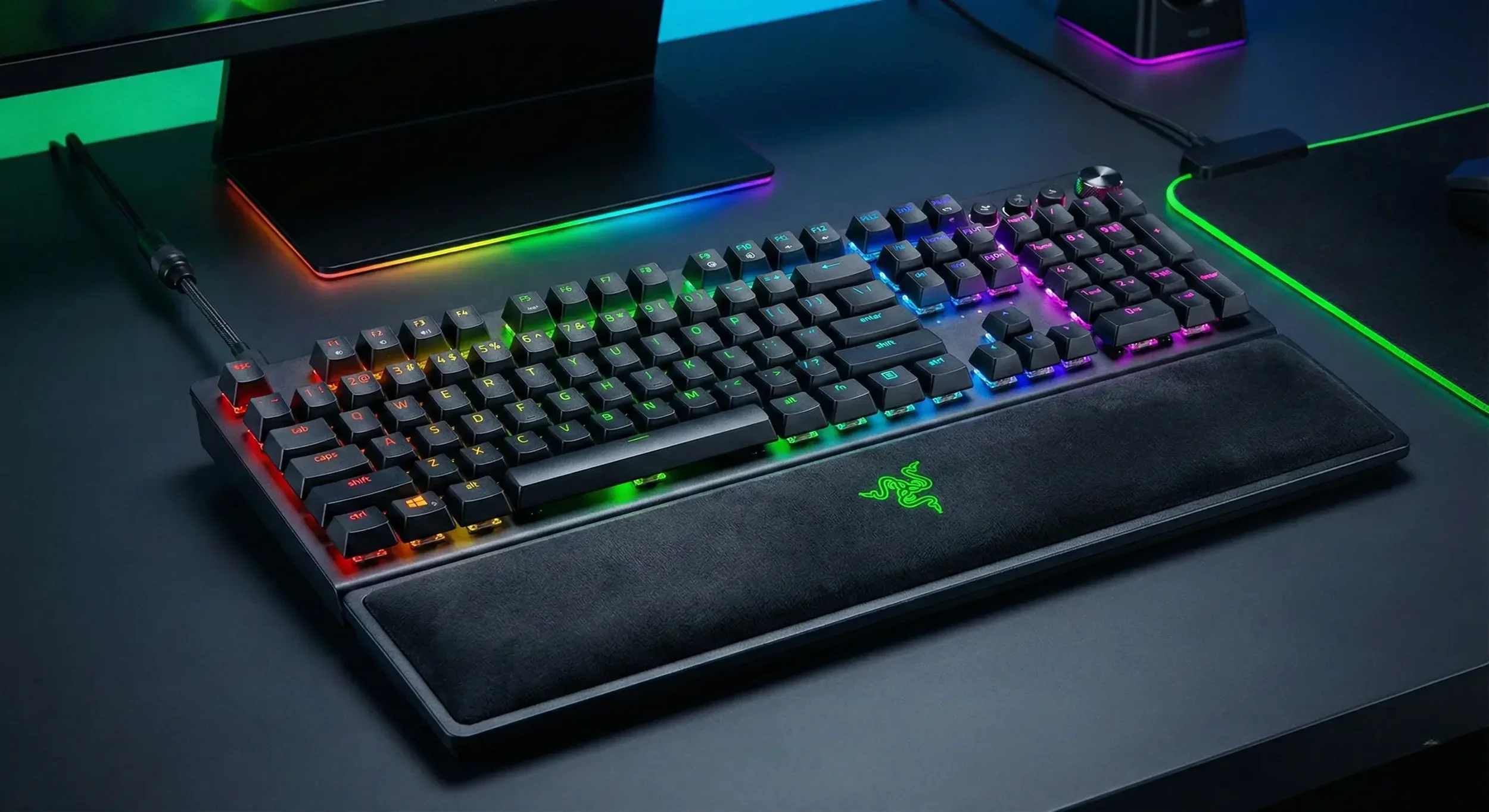
We’re on the doorstep of 2026. Your gaming rig probably features a graphics card worth more than some motorcycles, a display pushing refresh rates beyond what your eyes can process, and a mouse engineered to near weightlessness.
Yet here you are, still mashing rubber domes to execute your inputs.
The mechanical vs. membrane keyboard conversation has persisted for years, but heading into the new year, the divide isn’t just noticeable—it’s an absolute chasm. Hall Effect technology, Rapid Trigger functionality, and budget-friendly hot-swap options have essentially buried the membrane argument. Still, let’s dissect both sides properly (and hopefully convince you to make the switch) by examining exactly why mechanical keyboards dominate gaming in 2026.
 AMD GPU Price Hike Imminent: Graphics Cards for Your PC and PS5 Are About to Get More Expensive
 Table of Contents
The Membrane Defense: Cheap, Quiet, and Terrible (Mechanical vs. Membrane Keyboards)
Let’s examine what you’re working with. Membrane keyboards operate on straightforward mechanics: two flexible plastic layers containing conductive patterns sit separated by a gap. A rubber dome—the “membrane”—rests above them. Pressing a key compresses the dome, forces the layers together, and completes the circuit.
The Bottoming-Out Problem: Membrane boards demand full keypresses. You must drive each key completely down until rubber meets plastic for registration. This design creates significant gaming handicaps:
Undefined Tactility: Zero feedback precision. Every press feels like poking a sponge.
Finger Strain: Full depression on every keystroke means unnecessary exertion across marathon sessions.
Wear Degradation: Rubber deteriorates unevenly. After months of intense use, your movement keys will respond completely differently than rarely-touched ones.
Input Conflicts: Budget membrane boards share circuitry. Attempt complex multi-key combinations—moving, crouching, and reloading simultaneously—and inputs get dropped. Your death wasn’t a skill issue; your hardware failed basic arithmetic.
Any redeeming qualities? Marginally. Spill resistance, low cost, and silent operation exist. If your gaming environment demands absolute silence or your budget caps at spare change, they’ll function. But calling them “capable” stretches reality.
 How to Safely Clean Your PC: The Ultimate Maintenance Guide To Stop Overheating
 The Mechanical Supremacy: Precision Engineering
Mechanical keyboards abandon the plastic sandwich approach entirely. Each keycap sits atop an independent switch housing its own spring mechanism, stem assembly, and contact points.
The gaming advantage:
Pre-Travel Activation: Full depression isn’t required. A mechanical switch with 4mm total travel might activate at the 2mm mark. Result: faster key taps, quicker reactions, reduced finger effort.
Reliable Performance: Switch behavior stays consistent. The feel on your first gaming session matches your thousandth.
Complete Input Recognition: Execute any key combination imaginable. Full N-Key rollover means zero ghosting and zero dropped commands.
 Are ‘Gaming Routers’ the Biggest Scam in PC Hardware?
 The 2026 Meta: It’s Not Just “Mechanical” Anymore
Five years ago, this breakdown would conclude here. But we’re approaching 2026. The technology has evolved dramatically beyond standard Cherry-style switches.
1. Hall Effect & Magnetic Switches (The God Tier)
This represents the competitive gaming benchmark for 2026. Premium boards from Wooting, Razer’s Huntsman V3 Pro line, and SteelSeries Apex Pro series utilize magnetic sensing rather than physical contacts.
The significance: Without metal-on-metal contact, software controls your actuation threshold. Configure movement keys to trigger at 0.1mm for instantaneous response. Set ability keys deeper to prevent accidental activation. Complete customization.
Rapid Trigger Technology: Keys reset the microsecond pressure decreases, enabling input speeds mechanically impossible on conventional switches. For tactical shooter players in Counter-Strike 2 or Valorant, this delivers a borderline unfair advantage.
2. Optical Switches
Light-based actuation replaces physical contact points. Response times exceed traditional mechanical designs (eliminating debounce delays), and longevity extends essentially indefinitely.
3. Hot-Swappable PCBs
In 2026, purchasing soldered-switch keyboards (Hall Effect excepted) makes little sense. Hot-swap construction enables switch removal and replacement without tools. Spacebar feeling too light? Install a stiffer switch. This transforms your keyboard into an evolving platform rather than eventual e-waste.
 Big Hands? These Are the 5 Best Gaming Mice in 2025
 The “Mem-chanical” Scam
Consider this your public service announcement: Products labeled “Mem-chanical” or “Hybrid” deserve immediate avoidance. These remain membrane keyboards fitted with plastic click mechanisms for artificial sound feedback. You get membrane squishiness paired with mechanical noise—the disadvantages of both, benefits of neither. Pure marketing deception targeting uninformed buyers.
THE 2026 KEYBOARD SHOWDOWN
The performance breakdown demanding your attention.
| FEATURE | MEMBRANE | MECHANICAL (2026 STD) |
|---|---|---|
| Feel | Undefined, spongy, demands full depression. | Sharp, reliable, activation precedes bottom-out. |
| Speed | Sluggish recovery, elevated latency. | Immediate (particularly with Rapid Trigger/Optical). |
| Durability | 5-10 million actuations. Rubber compounds break down. | 50-100 million actuations. Performance unchanged throughout lifespan. |
| Rollover | Typically 2-6 simultaneous keys (Ghosting prevalent). | N-Key Rollover (Unlimited concurrent inputs). |
| Customization | Fixed configuration. No modifications possible. | Keycaps, switches, housings, cables, firmware—all swappable. |
| Price | $10 – $50 | $40 – $300+ (Quality entry-level now around $50). |
The Verdict: It’s Not Even Close
In 2026, the cost advantage that once justified membrane keyboards has evaporated. Respectable mechanical options from Keychron, Redragon, or Royal Kludge now start below $50.
If gaming matters to you—if translating mental commands into on-screen actions without hardware interference matters—mechanical is your only path forward. Competitive shooter players specifically should prioritize Hall Effect or Optical switch technology. Membrane keyboards served their purpose through the 90s and early 2000s, but they belong in technology retrospectives now, not active gaming setups.
Make the upgrade. Your performance statistics will reflect the difference.