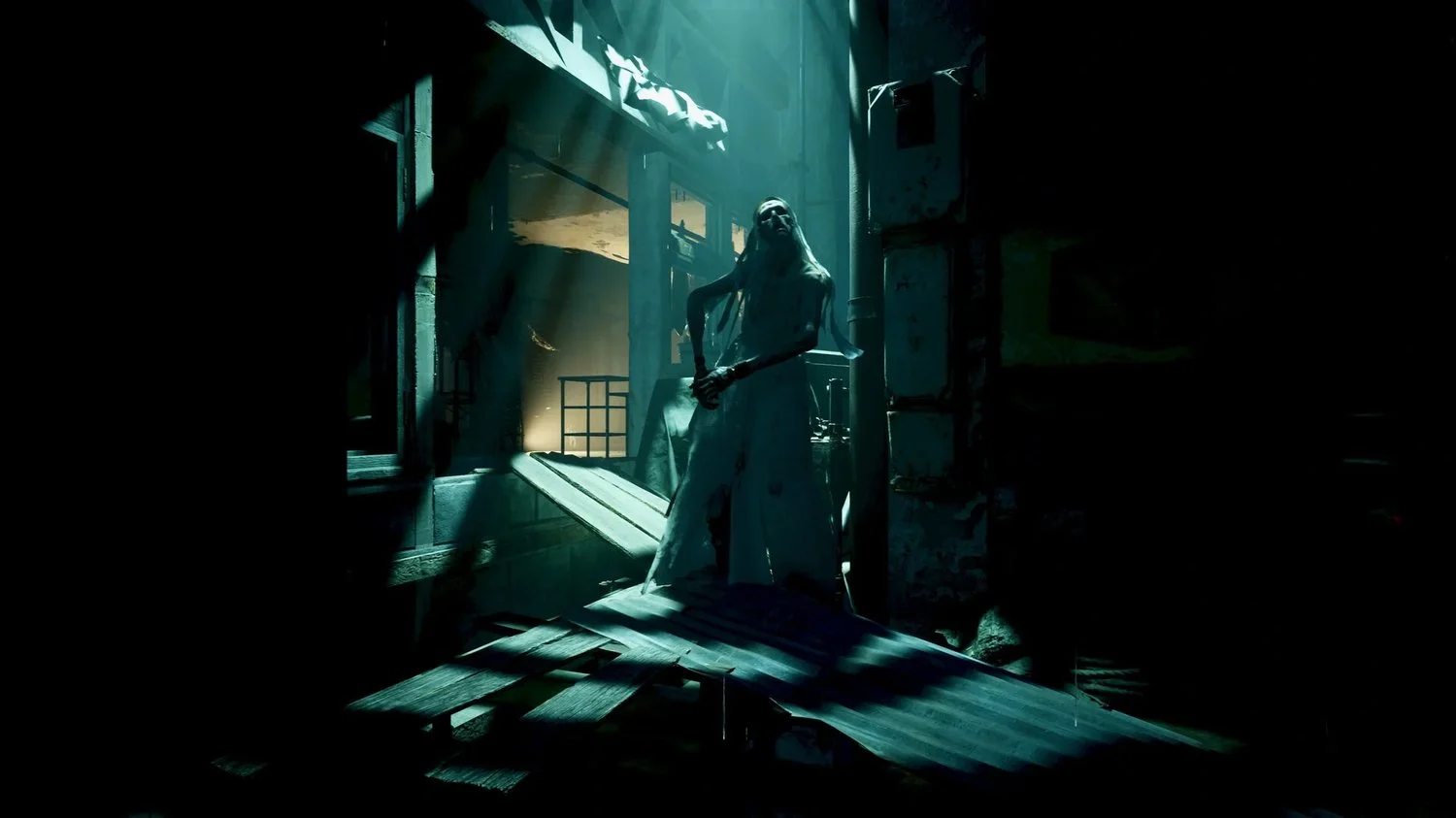
Have you ever woken from a vivid nightmare, only for the unsettling images and emotions to linger all day? That’s the feeling “Sleep Awake” aims to emulate, offering a psychological horror experience that promises to plunge players into a disorienting world. However, after spending time navigating its fragmented reality, it feels less like a game and more like a beautifully rendered, yet ultimately hollow, dream. This sleep awake review delves into why a game with such artistic promise struggles to deliver on engaging gameplay.
 Captain Wayne – Vacation Desperation Review: The Best Boomer Shooter of the Year Costs 10€
 Table of Contents
Key Points
- “Sleep Awake” offers a visually stunning and atmospheric psychological horror experience.
- The game prioritizes environmental storytelling and surreal dreamscapes over traditional mechanics.
- Its minimalist approach to gameplay often leads to confusion and a lack of clear objectives.
- Pacing issues and a short duration hinder the overall sense of accomplishment and immersion.
The Allure of the Nightmare: Visuals and Atmosphere
From the moment you step into “Sleep Awake,” its visual prowess is undeniable. The environments are meticulously crafted, shifting between desolate industrial complexes, eerily quiet domestic settings, and abstract, impossible spaces. The use of light and shadow, combined with subtle environmental effects, creates a genuinely unsettling atmosphere that constantly keeps you on edge.
What surprised me most, beyond the sheer graphical fidelity, was the game’s commitment to its surreal aesthetic. This isn’t your typical jump-scare fest; instead, it relies on psychological dread, playing with perception and memory. The sound design complements this perfectly, with distant, distorted whispers, unsettling ambient drones, and moments of profound silence that make every creak and groan of the environment feel amplified. This dedication to atmosphere is arguably the strongest aspect of the entire sleep awake review.
 News Tower Review: It’s Like The Sims Meets Citizen Kane, and I’m Addicted
 Lost in the Labyrinth: Gameplay and Mechanics
Here’s where “Sleep Awake” begins to falter. While the intention to create an immersive, narrative-driven experience without intrusive UI or typical game mechanics is admirable, its execution often leaves players feeling lost and frustrated. The initial hours of “Sleep Awake” are a masterclass in ambiguity, which can be gripping, but it quickly devolves into an exercise in aimless wandering.
The game provides minimal direction, which, in some horror titles, can enhance the tension. However, here it often means you’re unsure if you’ve missed something crucial or if there’s simply nothing to do. Puzzles are scarce and often involve basic environmental interactions, lacking the inventive design found in other psychological horror games. This makes forming a comprehensive sleep awake review challenging when the core gameplay loop is so opaque.
The Problem With Pacing and Progression
Adding to the sense of disorientation is the game’s uneven pacing. Moments of intense, unsettling atmosphere are punctuated by long stretches of simply walking through exquisitely detailed but empty corridors. While this might be an intentional design choice to simulate the fragmented nature of dreams, it often breaks the sense of immersion rather than enhancing it.
The progression feels less like solving an unfolding mystery and more like accidentally stumbling upon the next trigger. You never quite feel like you’re actively achieving goals or uncovering secrets; rather, things just happen around you. For a game that relies so heavily on its narrative, providing clearer, albeit subtle, signposts would have significantly improved the player experience, as I noted in my Midnight Heist 1.0 review, where co-op horror relies on communication and clear objectives.
 DuneCrawl Review – A Crabby Road Trip That Runs Out of Gas
 Narrative Ambiguity or Just Unfinished?
The narrative of “Sleep Awake” is, by design, abstract and open to interpretation. You piece together fragments of a story through environmental clues, short monologues, and surreal visions. This approach, when done well, can be incredibly powerful, especially in the horror genre, inviting players to ponder deeper meanings. However, in “Sleep Awake,” the ambiguity often feels less like artistic choice and more like a lack of cohesive storytelling.
It’s hard to care about the protagonist or their plight when their motivations and the overarching plot remain so vague throughout. While a game like Total Chaos thrives on its janky, visceral horror despite its rough edges, “Sleep Awake” leaves you wanting more substance beneath its beautiful facade. The story, whatever it is, never fully crystallizes, leaving players with a sense of “what was that all about?” rather than a profound emotional impact. Even short indie titles benefit from a more defined purpose, a point I highlighted in my Service With a Shotgun review.
 StarRupture Early Access Review: A Beautiful, Broken Factory Builder
 The Verdict: A Dream with No Direction
“Sleep Awake” is undoubtedly a striking experience from an artistic standpoint. Its graphics, sound design, and ability to create a genuine sense of psychological dread are commendable. However, these strengths are undermined by fundamental issues with gameplay, pacing, and narrative clarity. It’s a game that prefers to show rather than tell, but often forgets to give you a reason to stick around and decipher what it’s trying to show.
If you’re looking for a short, visually impressive art piece that dabbles in psychological horror and don’t mind a lack of traditional gameplay or clear objectives, “Sleep Awake” might offer a unique, albeit fleeting, experience. However, if you crave engagement, puzzles, or a coherent story in your horror games, this beautiful nightmare might just leave you feeling frustrated and wanting to wake up. This sleep awake review concludes that while it’s visually evocative, it ultimately fails to connect as a game.
 Moonlighter 2 Early Access Review: The Best Shopkeeping Sim Just Got a Whole Lot Better
 Frequently Asked Questions
What kind of game is “Sleep Awake”?
“Sleep Awake” is primarily a psychological horror walking simulator with a strong focus on atmospheric storytelling and surreal visuals. It minimizes traditional gameplay mechanics like combat or complex puzzles.
How long is “Sleep Awake”?
The length of “Sleep Awake” can vary depending on how much time a player spends exploring, but it is generally a very short experience, typically completable within 1 to 2 hours.
Are there jump scares in “Sleep Awake”?
“Sleep Awake” relies more on psychological dread, unsettling atmosphere, and surreal imagery to create horror rather than frequent jump scares. While there might be a few startling moments, they are not the primary method of fright.
Is “Sleep Awake” suitable for all players?
Due to its unsettling themes, surreal and potentially disturbing imagery, and psychological horror elements, “Sleep Awake” is best suited for mature players who enjoy abstract and atmospheric horror experiences.
Does “Sleep Awake” have a clear story?
The narrative in “Sleep Awake” is intentionally ambiguous and fragmented, told through environmental clues and surreal sequences. It aims for interpretation rather than a straightforward, linear plot, which some players may find unfulfilling.
 Mafia: The Old Country Review: An Offer You Can’t Quite Refuse